- MIG
- TIG
- MMA
Welding Beads: What Are They & How Should They Look?
Sarah Mazlin
04 August 2025
There are a few things that can influence how a weld bead will look. The welding process, welding technique and torch movement, filler material, machine settings and base material can all affect your weld bead.
The weld bead can also tell you a lot about the quality of the weld. Its size, shape and uniformity are a good indication of whether it’s a good weld.
What Is a Weld Bead?
A weld bead is made when a filler material is deposited into a weld joint between two pieces of metal. The weld bead is the result of a single pass of welding along a joint.
Your torch movement is the biggest influence on your weld bead’s appearance. The torch angle, travel speed and manipulation (if any) will impact how your weld bead comes out.
Types of Weld Beads, Torch Manipulation & Welding Techniques
You can manipulate your torch regardless of which weld process you’re using. Whether it’s hand fed filler rod, automatically fed filler wire, or a stick electrode, you control the torch movement.
Some torch techniques are common across all the weld processes, while others are specific to a particular process. The four most common torch movements used when welding are:
- Stringer beads
- Weave beads
- Whip motion
- Walking the cup
Stringer Beads
A stringer bead is the easiest type of bead to make. Simply push or pull (drag) the torch across the joint in a straight line with no side-to-side movement.
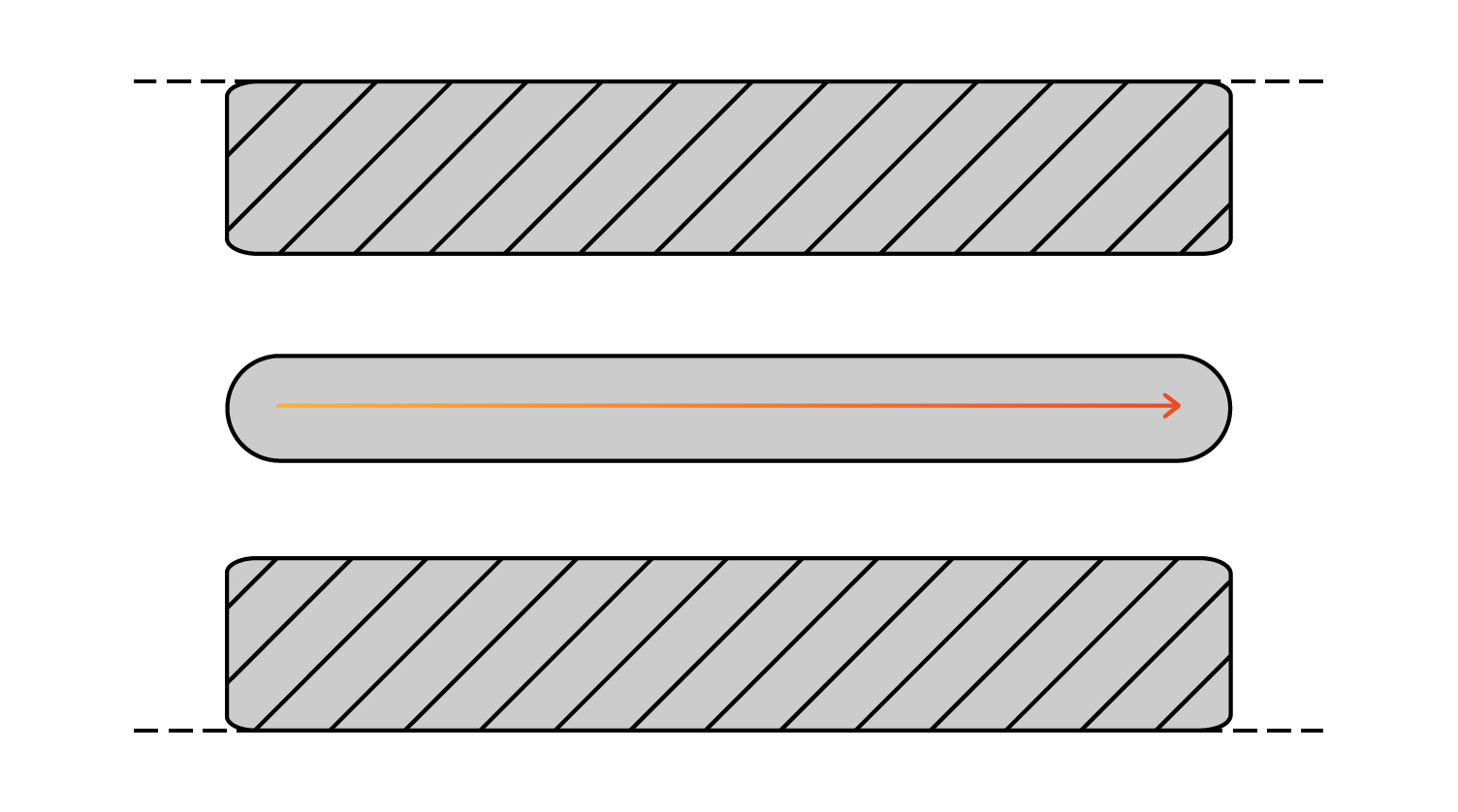
Whether you push or pull your stringer bead will depend on the type of filler metal you’re welding with. For gas-shielded fillers (MIG and TIG), you want to push. For gasless MIG and stick electrodes, you want to pull.
Push Technique
To push a weld, the torch is angled roughly 10° in the opposite direction than you’re travelling, with the wire at the leading edge of the weld pool. The weld is ‘pushed’ towards the unmelted surface.
Pull Technique
To pull (or drag) a weld, the torch is angled roughly 10° in the direction you’re travelling and ‘pulled’ along the surface, away from the weld pool.
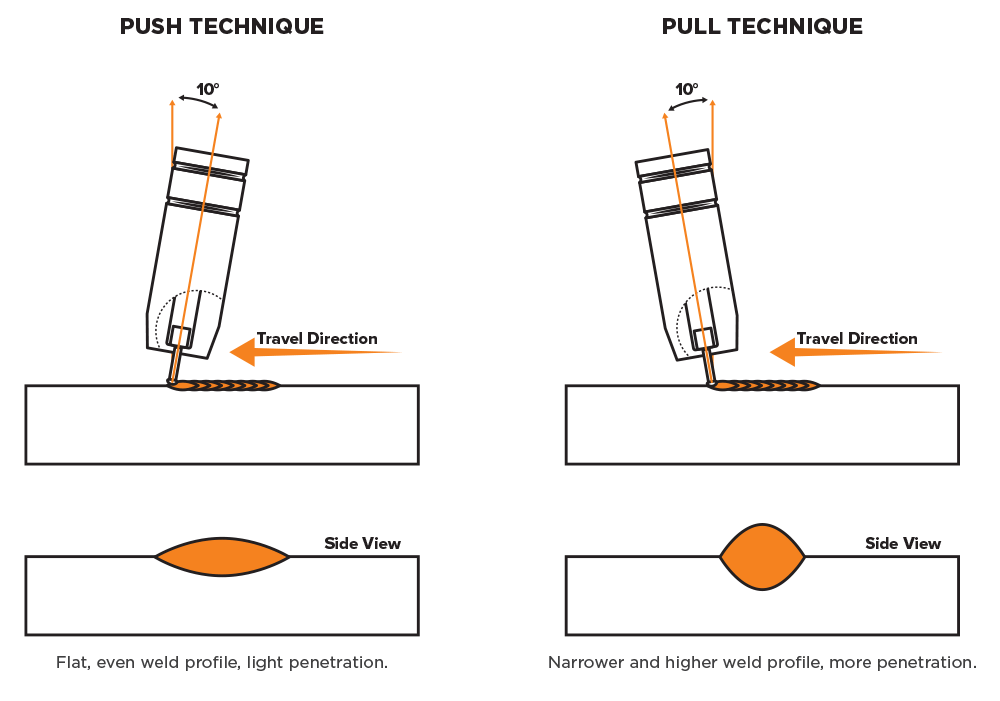
Stringer beads are generally thin and can be used in any welding position with any welding process.
Stringer beads are also used in hardfacing, a welding process where a layer of wear-resistant material is applied to a surface to extend its lifespan. This is generally done on industrial equipment like the teeth on excavator buckets, earth-moving equipment, and augers.
Weave Beads
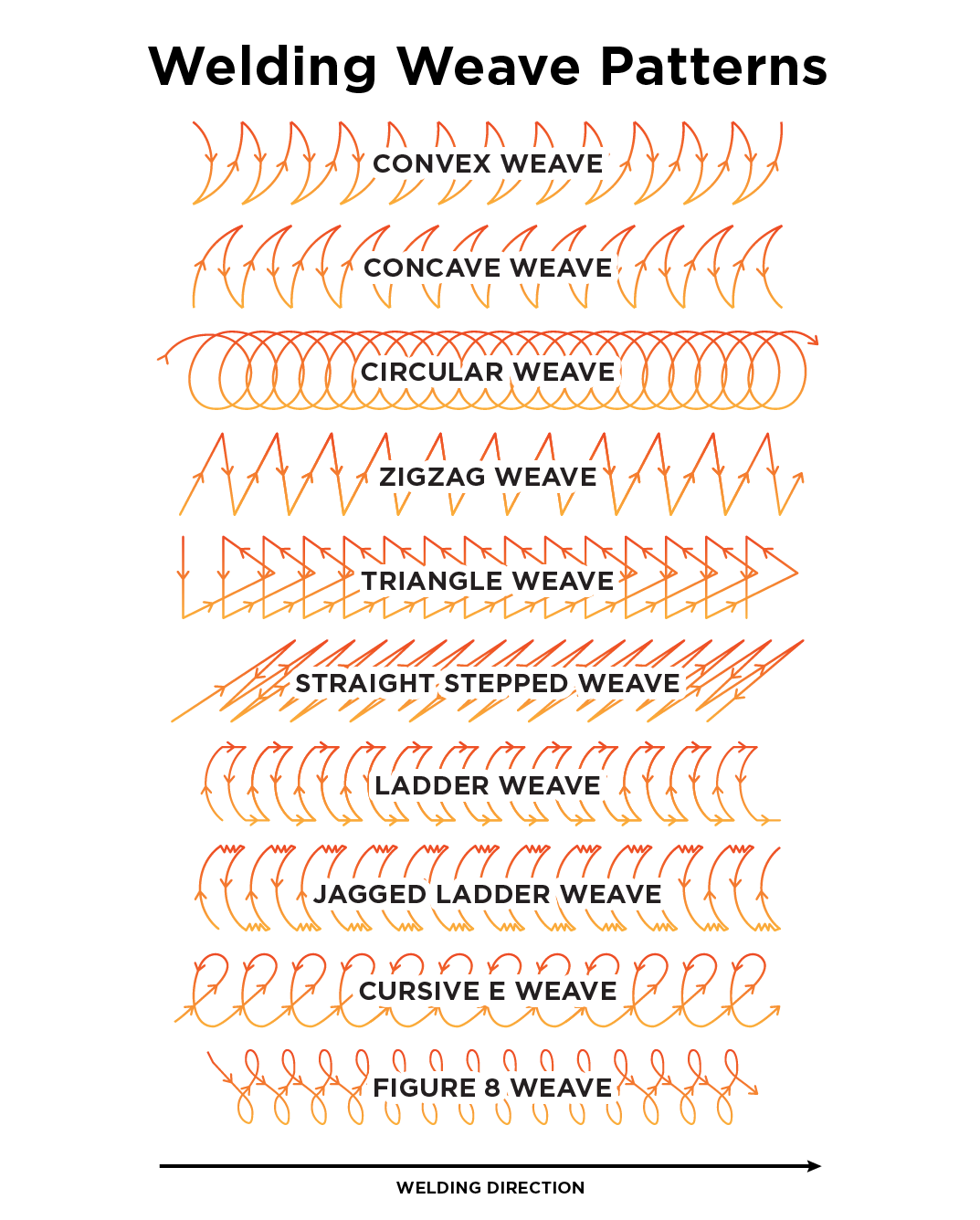
A weave bead is made by moving the torch side-to-side along the joint. Weaving is usually the fastest way to fill a wider joint, rather than running several stringer beads. How you weave the weld and move the torch affects the appearance and characteristics of the bead.
There are several different ways that a weave bead can be created, including:
- Convex
- Concave
- Circular/Curlicue
- Cursive e
- Zigzag
- Triangle
- Straight stepped
- Ladder
- Jagged
- Figure 8
Convex Bead
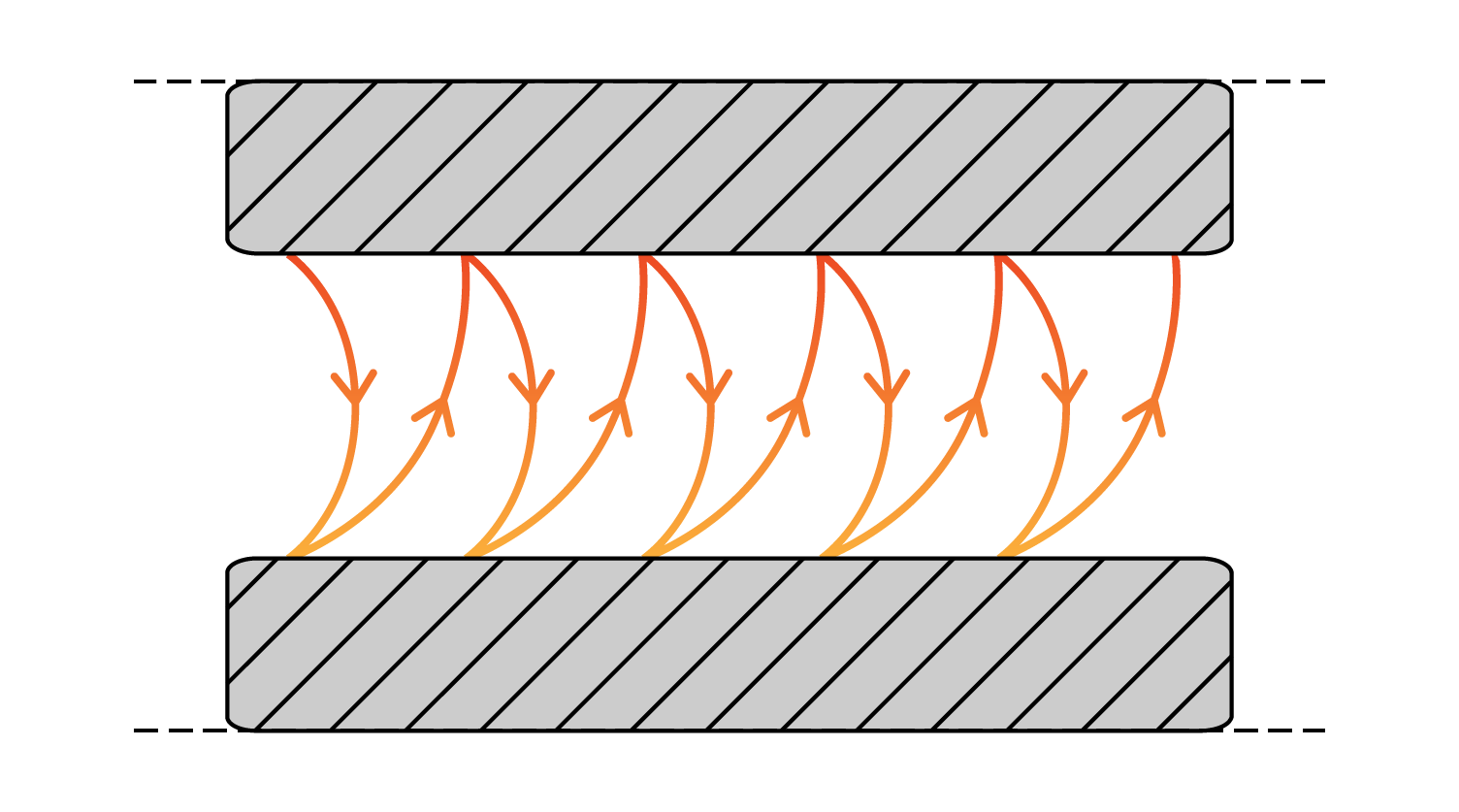
A convex weave bead is made by moving the torch side-to-side in a slightly curved line. The motion will look a bit like a crescent moon. The bead curves outwards away from the weld pool, pointing in the direction you’re travelling.
To avoid creating a bulge in the middle of the bead, you’ll need to move the torch a bit faster. Though you’re moving faster, you can still pause at each side of the curve to get proper fusion at the toes of the weld.
Concave Bead
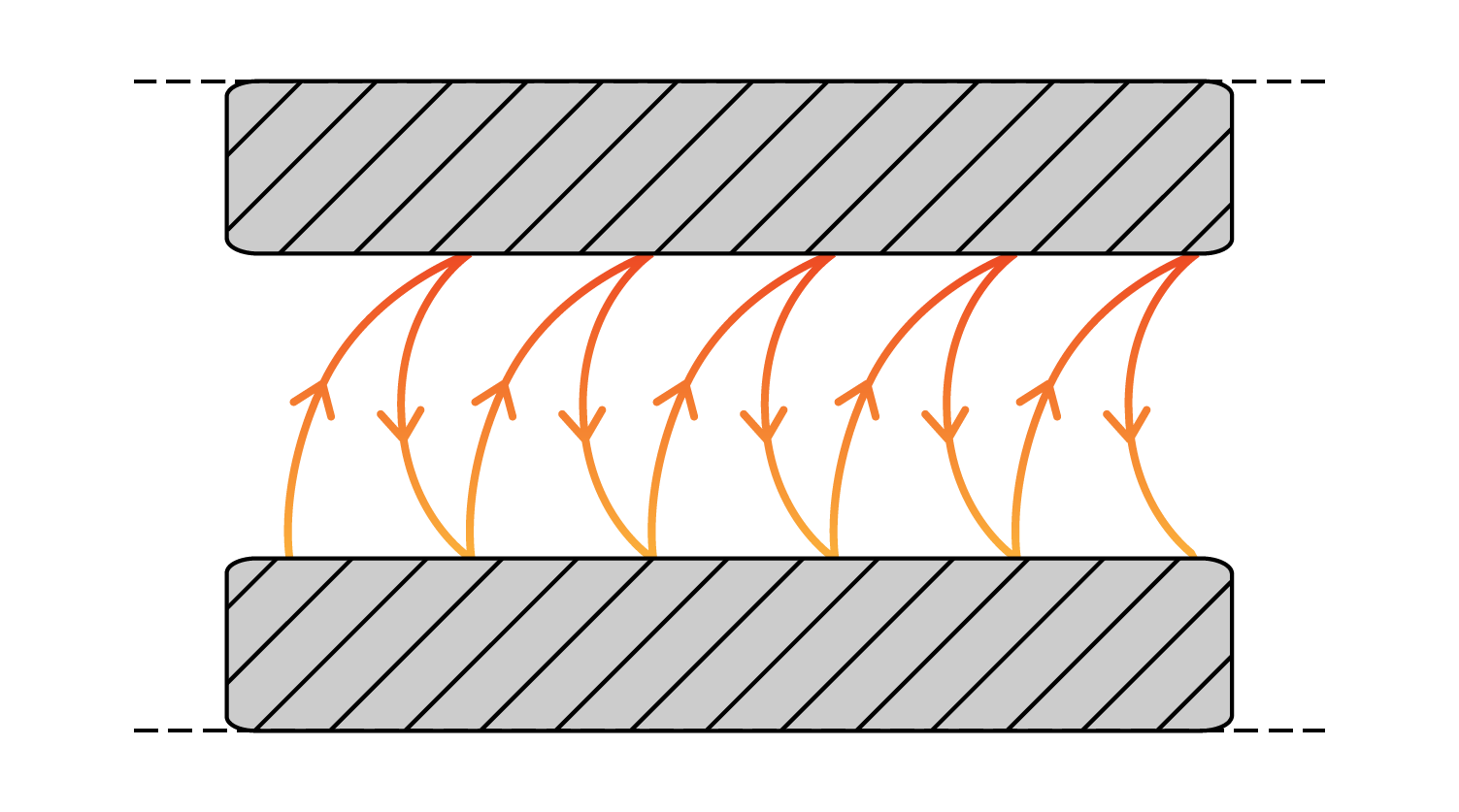
A concave weave bead is done almost the same way as the convex bead but is inversed. The rounded edge of this bead faces away from the direction of travel. Like the convex bead, you’ll want to speed up in the middle to avoid creating a high crown.
Convex and concave weave beads are commonly used when filling wider joints.
Circular/Curlicue Bead
A circular or curlicue weave bead is made by ‘drawing’ a series of ovals or circles with the torch. It combines the characteristics of both convex and concave weave beads. The puddle can become quite wide and hot, so moving quickly is important.
Cursive E

A cursive e weave bead is similar to a circular weave but is done at an angle rather than straight up and down. The cursive e is usually used on welds that will be seen, as it produces an aesthetic weld bead.
Zigzag Bead
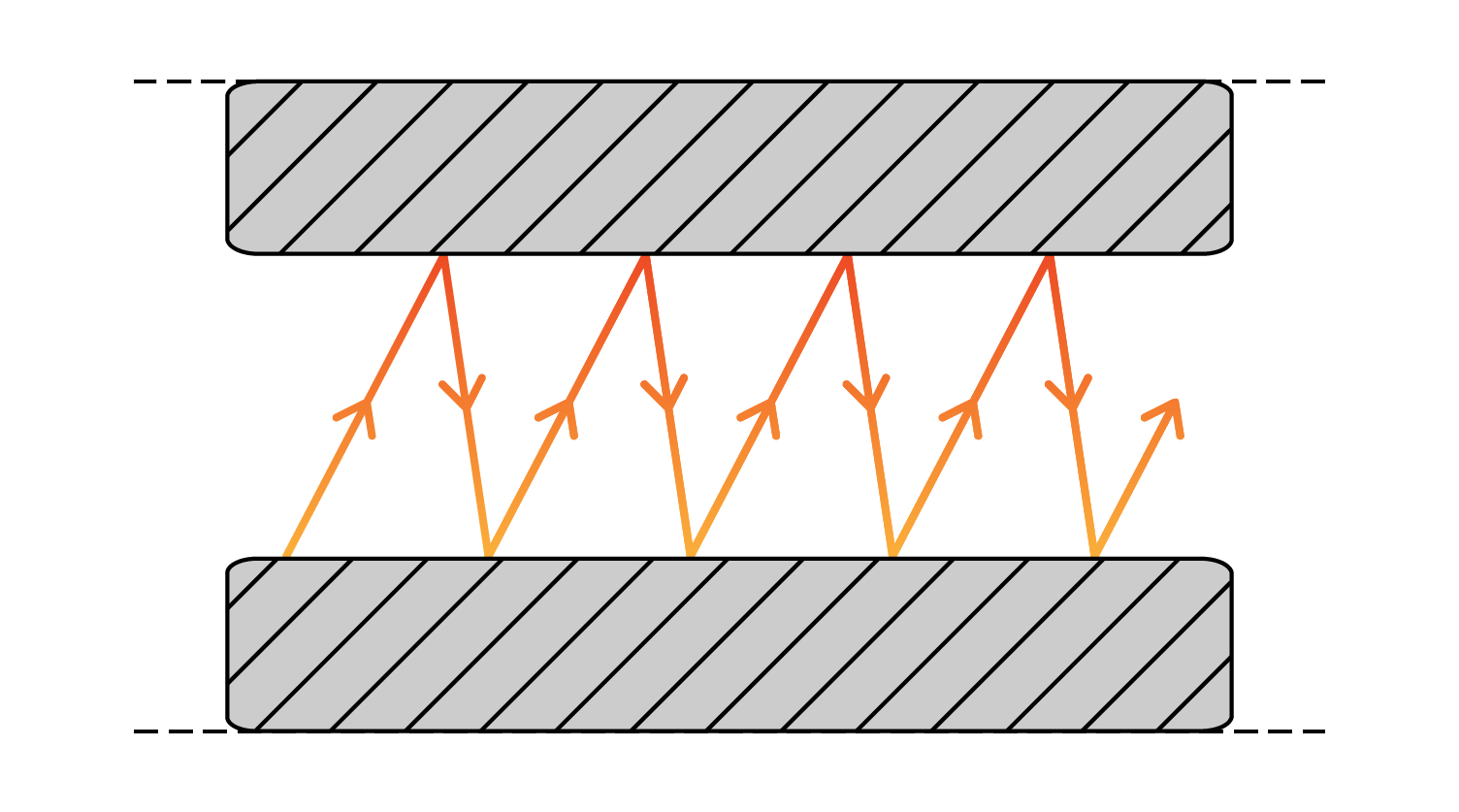
A zigzag weave bead is done by moving the torch diagonally up and down, with a steeper angle on the upwards motion than the downwards motion. The zigzag weave is one of the easier beads to do.
Triangle Bead
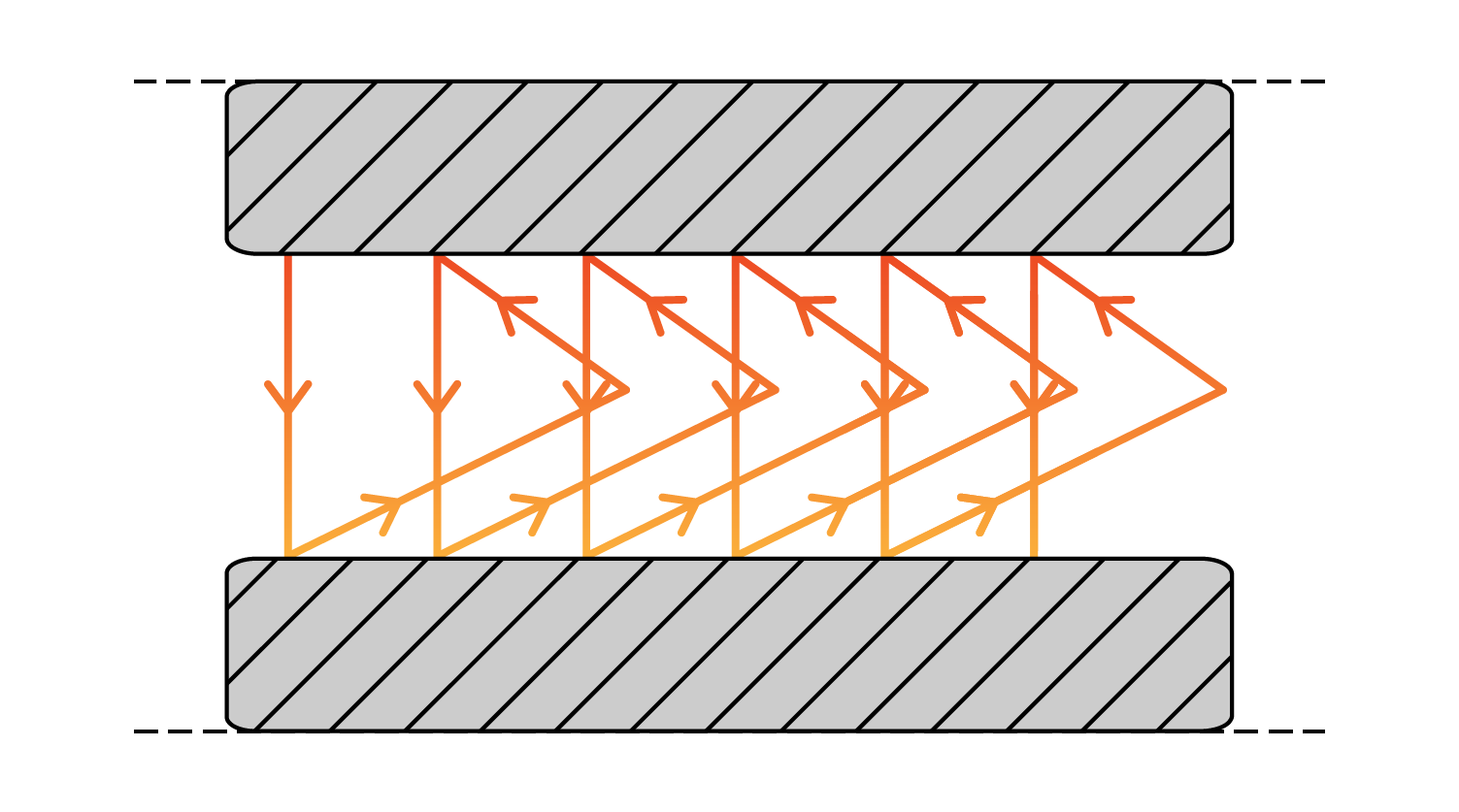
A triangle weave bead is made by drawing a series of connected triangles with the torch, with the point of the triangle facing the direction of travel.
The triangle weave bead is the technique we recommend using when welding vertical up, as it helps to lead the puddle into the weld joint and creates a shelf that prevents the molten metal from dripping out.
Straight Stepped Bead
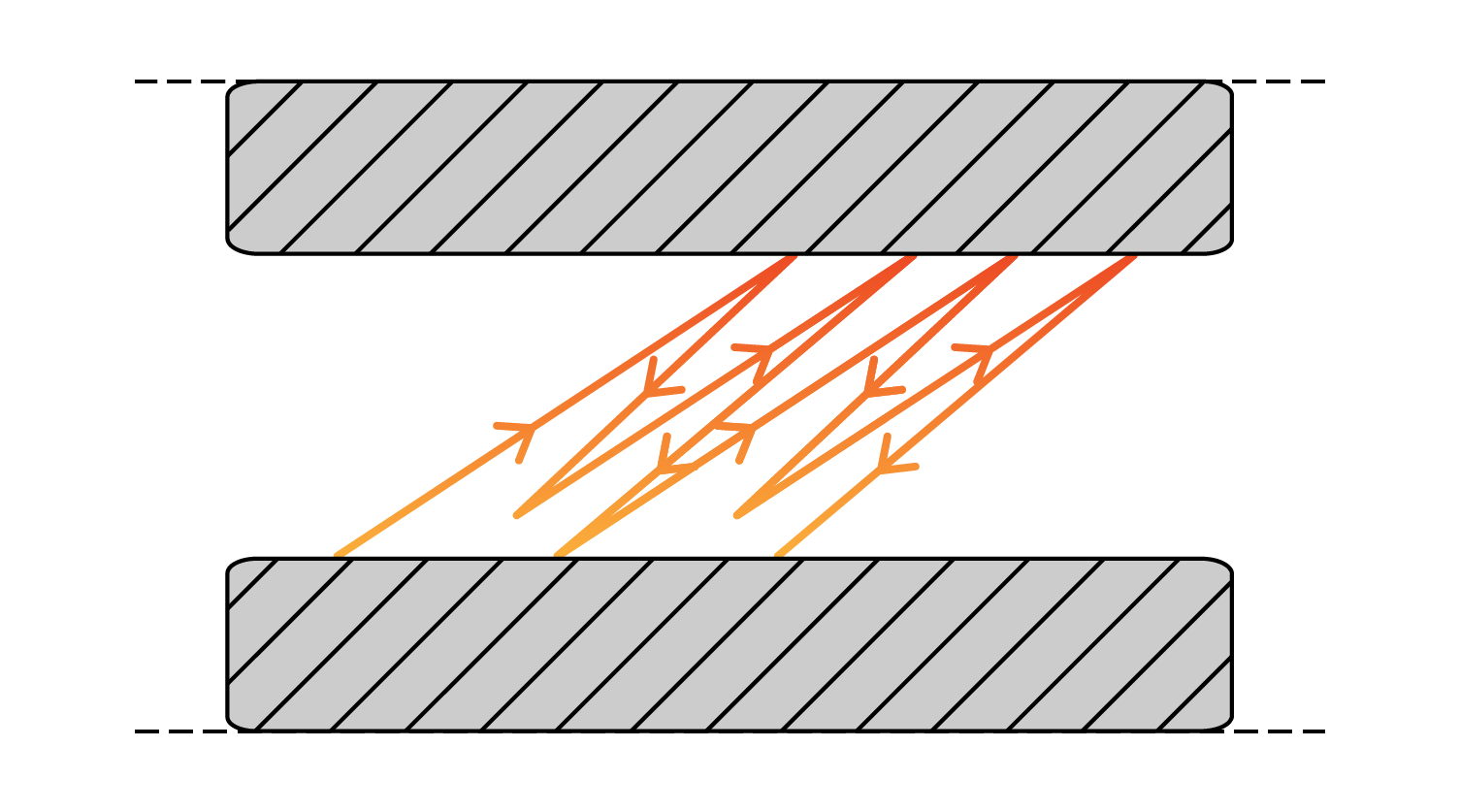
A straight stepped weave bead is done similarly to a zigzag but tighter and at a more exaggerated angle. It’s generally used when making multi-pass welds over the top of a root pass.
Ladder Bead
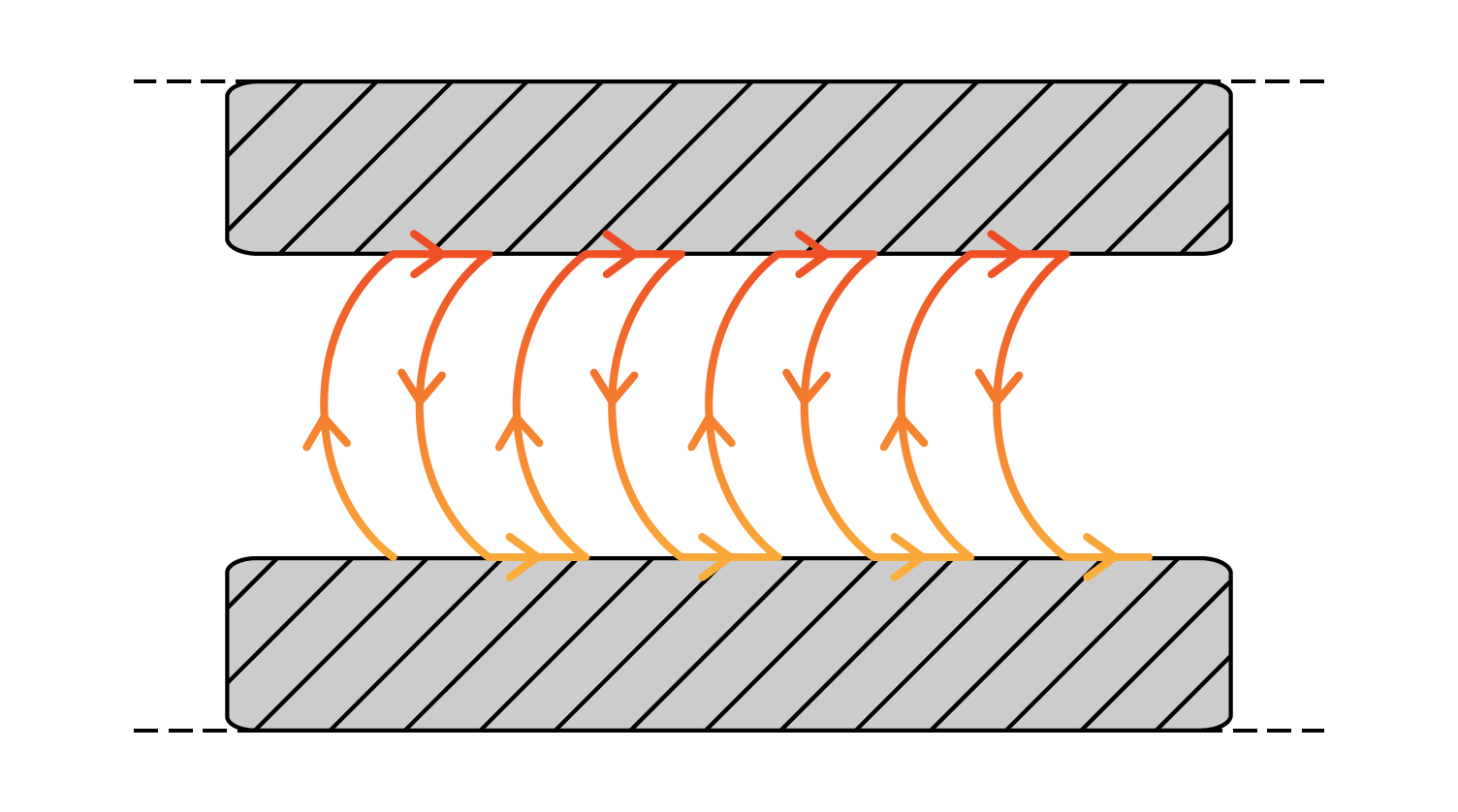
A ladder weave bead is made by drawing a series of rectangles moving along the joint to look like a ladder. The up and downward lines, or the long sides of the rectangle, should be slightly curved, and the forward motion creates the rectangle’s short sides.
Jagged Bead
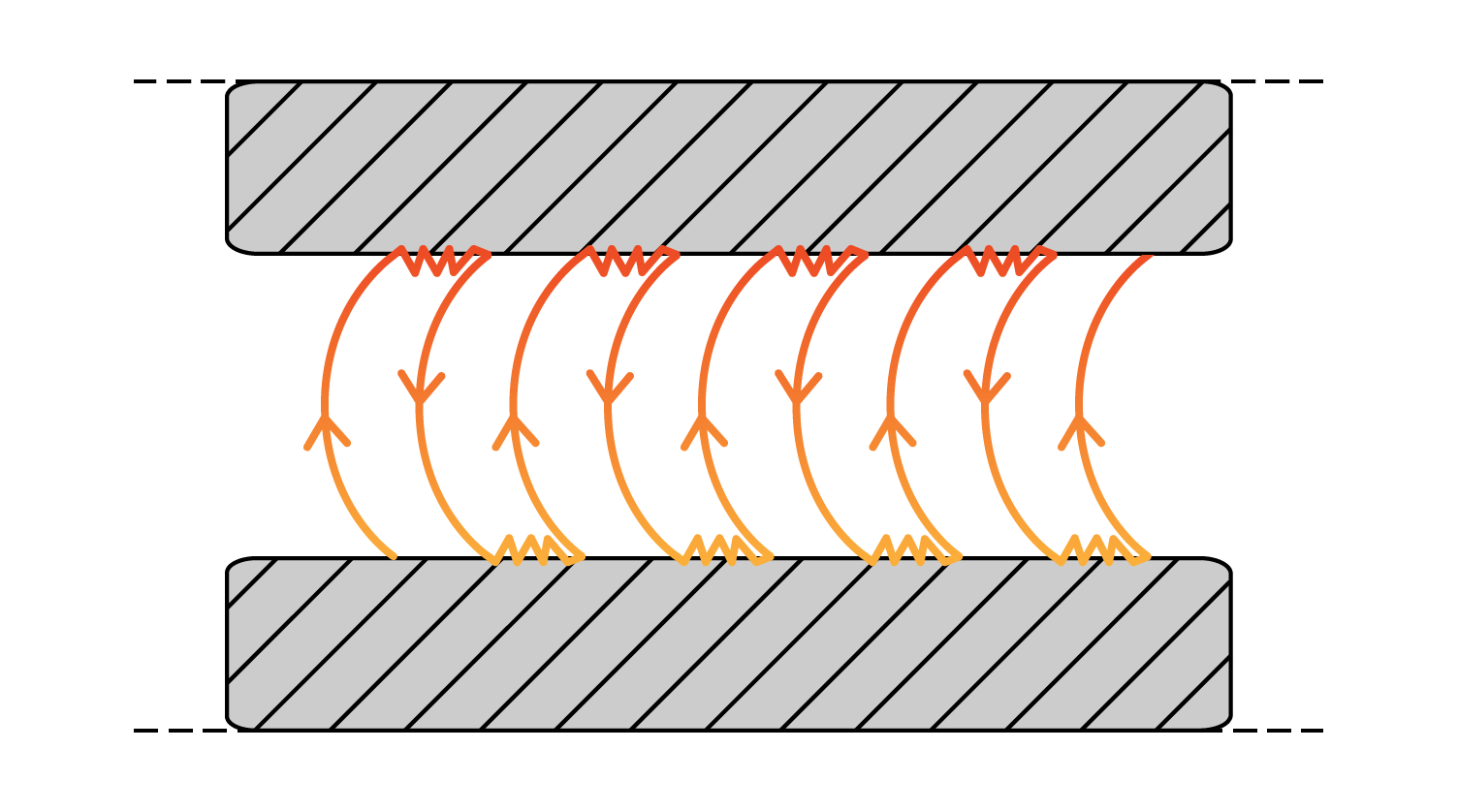
A jagged weave bead is done in the same way as a ladder weave, but when advancing the weld pool along the short sides of the rectangle, rather than travelling in a straight line, the sides should be jagged, like teeth. This provides a good tie-in on the toes of the weld.
Figure 8 Bead
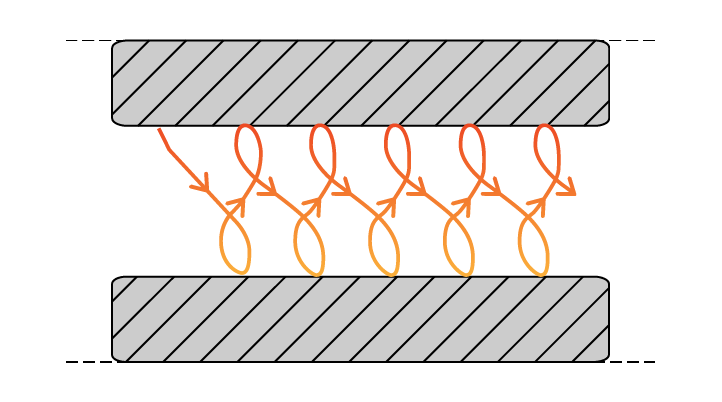
A figure 8 weave bead is made by drawing the number 8 with your torch. While the movement is familiar, doing this with a welding torch can be challenging and takes a bit of practise to get right.
Almost all of these weaves will be done while MIG welding. It is the easiest welding process to manipulate the torch in, and many of these movements are either impossible with a TIG rod or will leave you with slag inclusions when stick welding.
Whip Motion (stick)
When stick welding, you’ll almost always be running stringer beads, as overlapping flux as it hardens is just going to cause you problems. The only times this isn’t true is when you’re vertical up welding, where you want to employ the triangle or ‘Christmas tree’ technique. The other time is when using a cellulosic electrode.
Cellulose electrodes, like 6010s, are known as ‘fast freezing’, one of the characteristics specific to these electrodes. When using a cellulose electrode, you can use the ‘whip’ motion or backstep technique.

Like a stringer bead, there is no side-to-side movement, but there’s more manipulation than just pushing or pulling a straight line.
To whip a stick electrode, it’s like doing two steps forward and one step back. ‘Whip’ the electrode in front of the puddle by two steps, then take one step back into the puddle. Your ‘steps’ are roughly the same size as the diameter of your electrode, so if you’re welding with 2.6mm electrodes, you’ll whip forward roughly 5mm and backstep by roughly 2.5mm.
The forward motion of the whip helps to penetrate into the joint, while the backstep then fills the joint properly.
Note
This can only be done with cellulosic rods, any other kind of rod, and you’ll likely end up with a weld bead full of slag inclusions.
Walking the Cup (TIG)
Walking the cup is strictly a TIG torch movement, as it’s the only weld process with a cup that can be walked.
To walk your cup, you want to rock your cup diagonally side to side along the joint, almost in a zigzag motion. Your wrist should be rotating in a sort of figure 8 shape. You don’t need to push the torch forward, just rest the cup lightly on the joint, and the rocking or ‘walking’ of it will naturally pull itself along.
If you’re doing it correctly, your cup will literally look like it’s walking. The right side will take a step forward, then your left, and so on.
While walking your cup, you don’t want to dab the filler rod in. Instead, you should lay the wire into the joint and let the heat from the torch melt it into the joint.
Walking the cup is generally used when pipe welding, though it can be done on flat joints. However, it does tend to leave scratch marks where the cup rests against the metal.
What Does a Good Weld Bead Look Like?
A good weld bead is straight, flat, uniform, even in width the whole way, with proper penetration and no weld defects. There shouldn’t be any undercut, overlap, porosity, or cracks. There should also be minimal spatter (depending on your process) and no black soot.
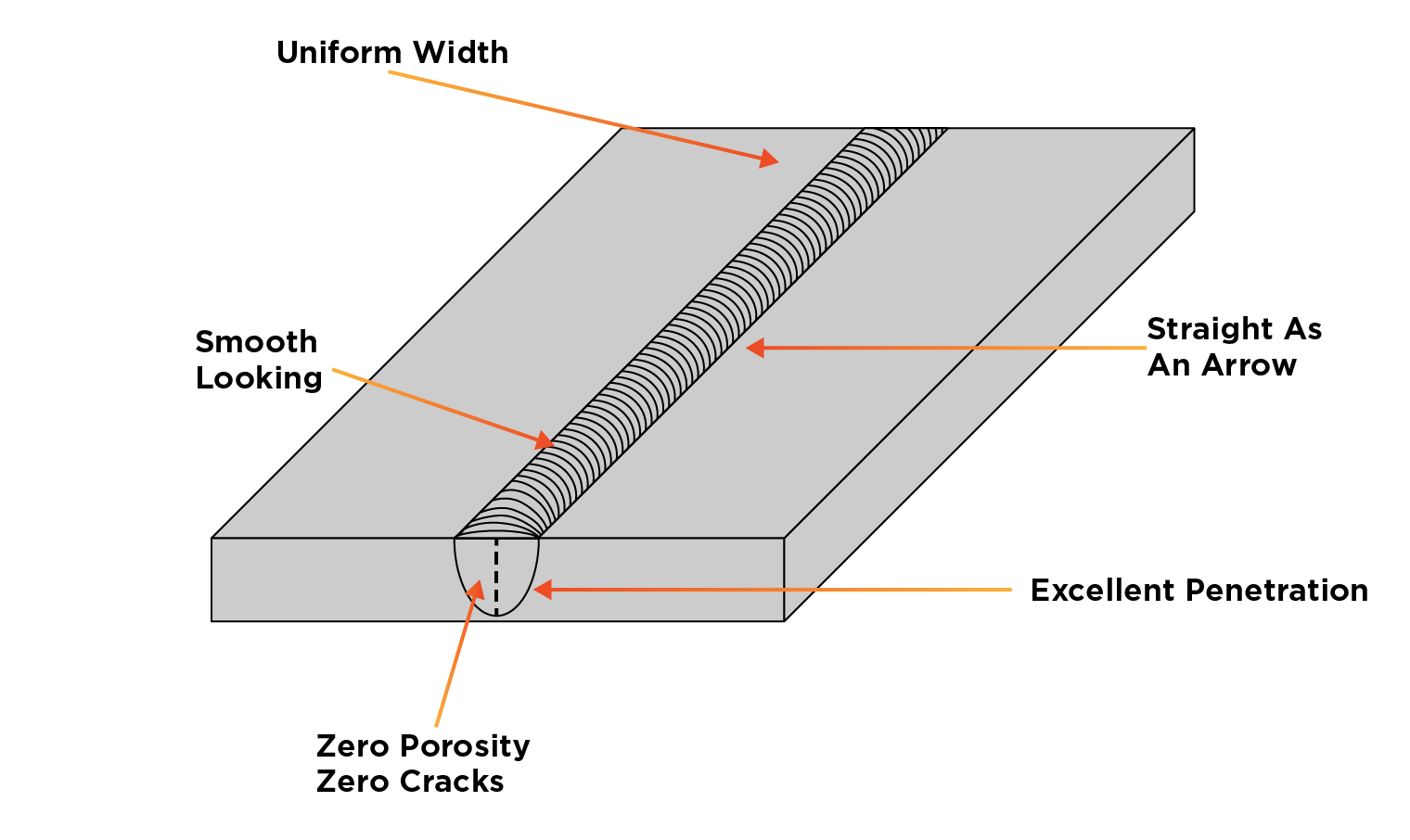
The weld bead should be straight, but if you’re struggling to maintain a straight line or it’s hard to see the joint with your hood down, one thing you can do is draw a chalk line. This is usually easier to see and follow once you start welding than the weld joint.
The weld bead should be mitre (flat) and not convex or concave in appearance. If you’re welding a butt joint, a little bit of a curve on the bead is acceptable and it can always be ground down if needed.

A convex (or ropey) weld bead can be caused by not having enough heat in the weld (the volts are too low), too much wire feed speed, or travelling too slowly, which causes the weld to build up on top rather than melt in.
A concave weld bead can be caused by having too much heat in the weld (the volts are too high), not having enough wire feed speed (so not enough filler is being added) or travelling too fast.
When MIG welding, your voltage, wire feed speed and travel speed need to work together to produce a good, mitre weld bead with proper reinforcement. If you’re TIG or stick welding, your amperage, filler amount, and travel speed all need to be working together.

If there are differing widths along the weld, it’s likely that you’re not travelling at the same speed the whole way along the joint.
Adjust your settings to suit the material you’re welding and maintain a consistent travel speed that lets your weld penetrate without moving too slowly.
Getting a good weld bead can take practice, as there are various things to think about. Your torch movement, machine settings, travel speed, etc., all play a role in how your bead is going to turn out.
If you’re just beginning to weld, start by running stringer beads and get the hang of laying down smooth, straight beads. Once you’re confident with that, you can start learning some of the more technical torch movements and laying down some great looking weld beads.
Get The Free Ultimate Welding Guide!
Welding tutorials, tips, and settings in one eBook.